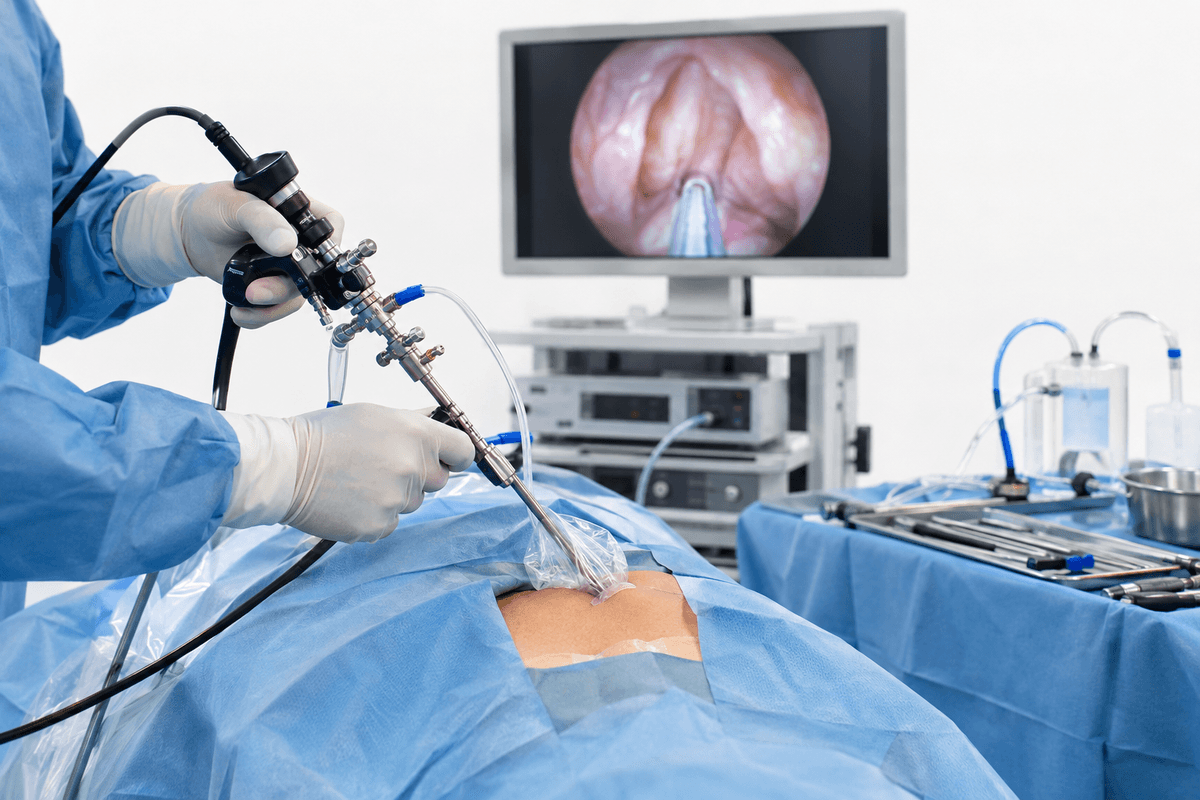
Performed by our specialist team at Shreedeep Hospital
Prostate Surgery (TURP) in Ahmednagar is a minimally invasive procedure to treat benign prostatic hyperplasia (BPH) by removing excess prostate tissue that blocks urine flow. This gold-standard surgical technique relieves urinary symptoms, improves quality of life, and restores normal bladder function. Our specialist team at Shreedeep Hospital performs TURP with advanced endoscopic equipment and comprehensive post-operative care.
We believe in honest, upfront disclosure so you can make an informed decision.
A step-by-step look at what happens during this procedure.
The patient receives spinal or general anaesthesia to ensure comfort throughout the procedure. Vital signs are continuously monitored by the anaesthesia team.
A specialized instrument called a resectoscope is inserted through the urethra to reach the prostate gland without any external incisions. The scope contains a camera, light source, and electrical loop.
The surgeon uses an electrically heated wire loop to carefully remove excess prostate tissue in small pieces, relieving the obstruction. Irrigation fluid continuously flushes the area to maintain visibility.
Bleeding vessels are cauterized using the resectoscope's electrical current. The surgeon thoroughly inspects the surgical site to ensure complete tissue removal and adequate hemostasis.
A urinary catheter is inserted through the urethra into the bladder to drain urine and allow healing. Continuous bladder irrigation may be used initially to prevent blood clot formation.
A structured, patient-first approach from first consultation to full recovery.
Shreedeep Hospital conducts comprehensive pre-operative assessment including uroflowmetry, post-void residual measurement, and prostate-specific antigen testing to determine the optimal surgical approach for each patient.
Our specialist team utilizes modern resectoscope systems with high-definition imaging and bipolar technology, minimizing tissue damage and reducing complications while ensuring precise tissue removal.
Our dedicated nursing team provides round-the-clock monitoring, pain management, catheter care, and bladder irrigation management. Patients receive detailed instructions for home recovery and scheduled follow-up appointments.
Shreedeep Hospital offers specialized pelvic floor exercises, dietary counseling, and lifestyle modification programs to optimize recovery, prevent complications, and ensure long-term urinary health after TURP.
What to expect at each stage of your recovery journey.
The first 2-3 days involve hospital stay with catheter in place and bladder irrigation. Patients may experience mild discomfort, blood-tinged urine, and bladder spasms which are managed with medications. Adequate hydration and rest are essential during this phase.
Weeks 1-2 after catheter removal involve gradual improvement in urinary control and stream. Patients should avoid heavy lifting, strenuous exercise, and straining. Mild burning during urination and occasional blood in urine are normal and resolve progressively.
Weeks 3-6 mark significant improvement in urinary symptoms with stronger flow and better bladder emptying. Most patients can resume all normal activities including work and exercise. Full healing of the prostate area continues, and maximum symptom relief is typically achieved by 3 months.
Most patients experience substantial improvement in urinary flow rate, reduction in frequency and urgency, better bladder emptying, and decreased nighttime urination within weeks of surgery.
Patients report enhanced daily functioning, better sleep quality, reduced anxiety about urinary issues, and ability to participate in social activities without constant concern about bathroom access.
TURP provides lasting results with most patients remaining symptom-free for 10-15 years or more. The need for repeat surgery is uncommon, making it a definitive treatment option for BPH.
The vast majority of patients maintain normal urinary control after recovery. While temporary incontinence may occur initially, long-term complete continence is achieved in over 95% of cases with proper technique.
Let's clear up some of the most common myths about prostate surgery (turp).
Get a personalised assessment from an experienced specialist. Understand your options, ask your questions, and decide with confidence.