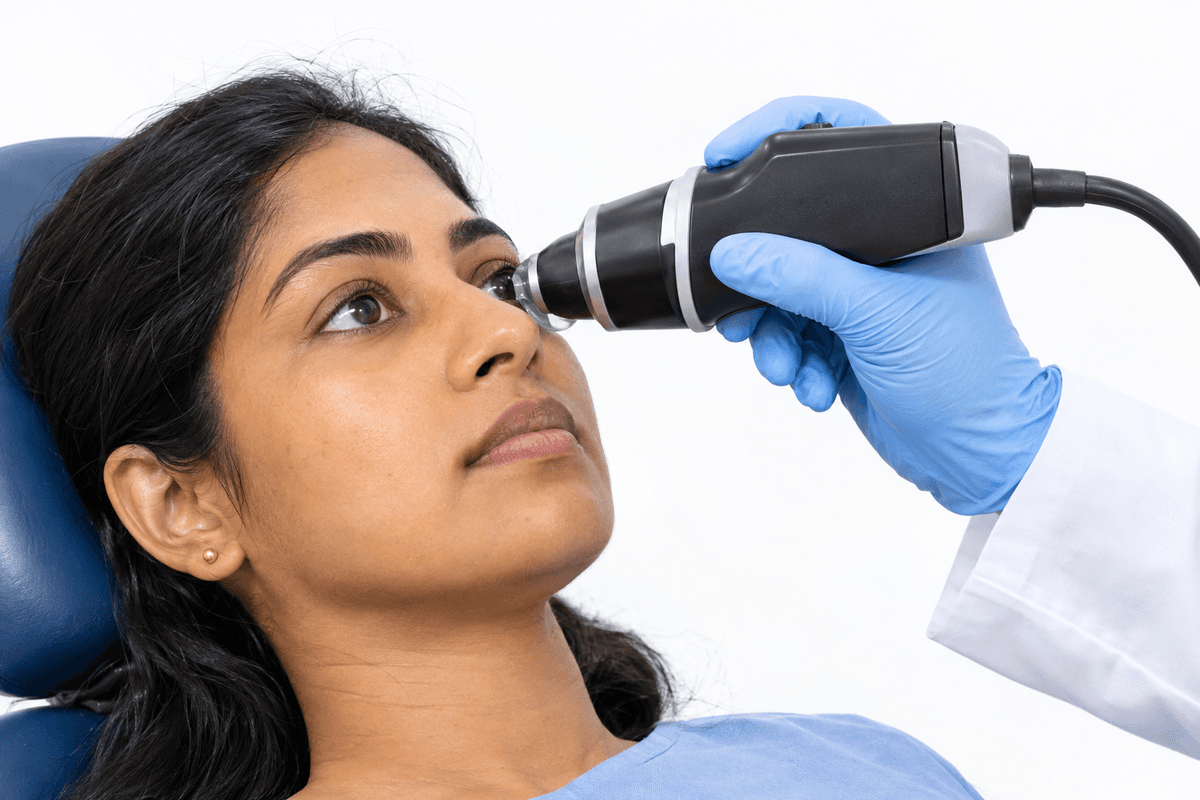
Performed by our specialist team at Shreedeep Hospital
A-Scan ultrasound in Ahmednagar is a diagnostic ophthalmic procedure that uses high-frequency sound waves to measure the eye's axial length and calculate intraocular lens (IOL) power before cataract surgery. This non-invasive test provides critical biometric data to ensure good vision outcomes. Our specialist team at Shreedeep Hospital performs A-Scan examinations with modern equipment for precise measurements.
We believe in honest, upfront disclosure so you can make an informed decision.
A step-by-step look at what happens during this procedure.
The patient is seated comfortably or lies down while the ophthalmologist prepares the A-Scan equipment and explains the brief procedure.
Anesthetic eye drops are instilled into the eye to ensure comfort during probe contact, though some modern A-Scans use non-contact methods.
A small ultrasound probe is gently placed on the corneal surface or positioned near the eye, emitting high-frequency sound waves that penetrate the eye structures.
The ultrasound waves reflect off different eye structures including the cornea, lens, and retina, and the device calculates the axial length and anterior chamber depth based on the time taken for echoes to return.
The ophthalmologist reviews the measurements, typically taking multiple readings to ensure accuracy, and uses this data to calculate the optimal intraocular lens power for cataract surgery or assess eye abnormalities.
A structured, patient-first approach from first consultation to full recovery.
Shreedeep Hospital utilizes modern optical biometry and ultrasound A-Scan devices that provide highly accurate axial length measurements with minimal patient discomfort and maximum precision.
Our specialist team ensures proper probe alignment and takes multiple measurements to verify consistency, following international standards for biometry to guarantee the most reliable results for IOL calculations.
Our team combines A-Scan data with other diagnostic tests including keratometry and corneal topography to create a complete biometric profile for personalized surgical planning.
We explain the procedure thoroughly, address all patient concerns, and provide detailed reports with IOL power recommendations, ensuring patients understand their treatment plan before cataract surgery.
What to expect at each stage of your recovery journey.
Patients can resume normal activities immediately after the A-Scan. Any temporary blurred vision from the coupling gel or eye drops typically clears within 15-30 minutes.
Mild tearing or slight discomfort may occur but resolves quickly. Patients can drive home safely once any temporary vision blur from drops has cleared completely.
No activity restrictions are necessary. Patients return to work, daily routines, and all regular activities without any limitations or special precautions.
A-Scan provides accurate axial length measurements enabling ophthalmologists to calculate the optimal intraocular lens power, significantly improving post-cataract surgery vision outcomes and reducing refractive errors.
The detailed biometric data allows surgeons to select the most appropriate IOL type and power for each individual patient, personalizing the cataract surgery approach for better visual results.
A-Scan can identify eye structural abnormalities, tumors, or unusual axial lengths that may require modified surgical techniques or additional investigations before proceeding with treatment.
Accurate preoperative measurements lead to better refractive outcomes after cataract surgery, with most patients achieving their target vision and experiencing high satisfaction with their visual results.
Let's clear up some of the most common myths about a-scan.
Get a personalised assessment from an experienced specialist. Understand your options, ask your questions, and decide with confidence.