Treated by our specialist team at Shreedeep Hospital
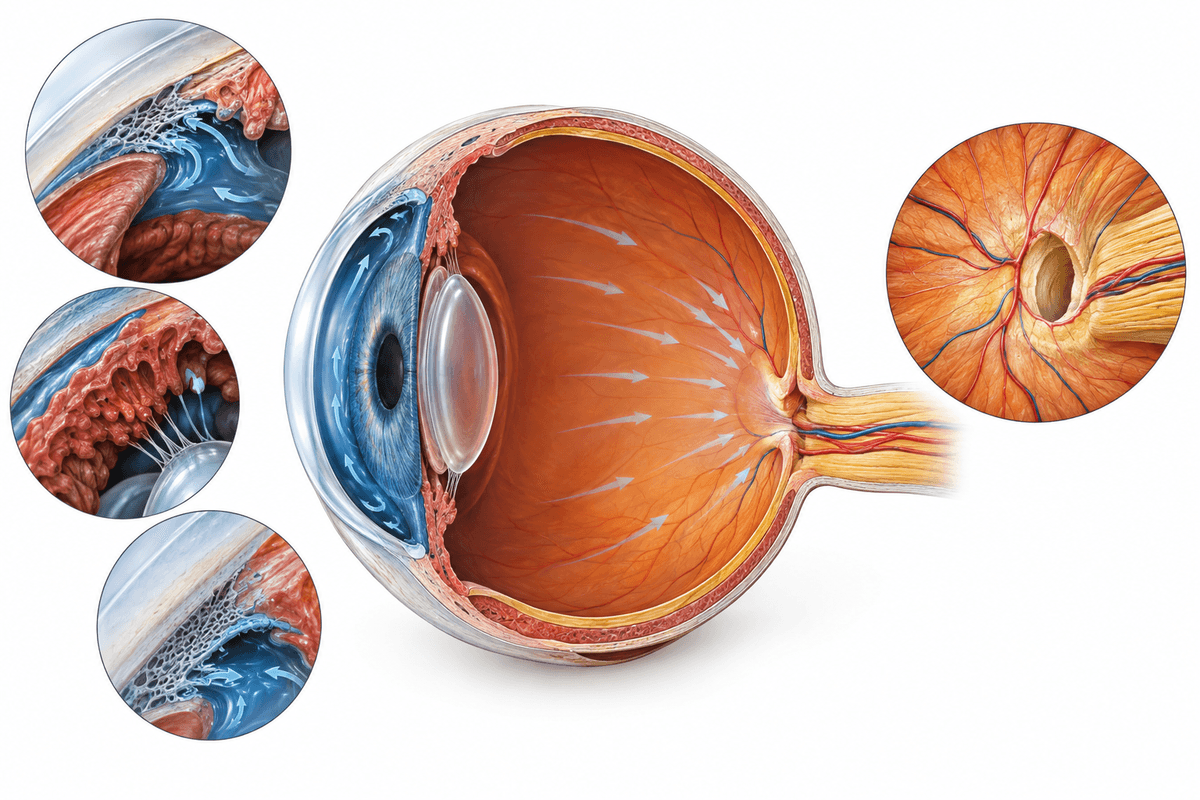
Glaucoma is a group of eye conditions that damage the optic nerve, often due to elevated intraocular pressure, and is a leading cause of irreversible blindness in Ahmednagar and worldwide. Early detection is crucial as vision loss from glaucoma cannot be reversed, though progression can be halted with proper treatment. Our specialist team at Shreedeep Hospital provides comprehensive glaucoma evaluation and management using advanced diagnostic technology and evidence-based treatment approaches.
The most common form where the drainage angle remains open but the trabecular meshwork is partially blocked, causing gradual pressure increase and slow, painless vision loss over years.
Occurs when the iris bulges forward and blocks the drainage angle, causing rapid pressure increase. Can be acute (sudden, painful emergency) or chronic (gradual development).
Optic nerve damage occurs despite normal eye pressure levels, possibly due to poor blood flow or nerve sensitivity. Requires careful monitoring and pressure reduction below normal range.
Multiple factors can contribute to the development and progression of this condition.
Recognising the signs early gives you more treatment options.
From conservative to surgical — we always start with the least invasive option first.
A structured, patient-first approach from first visit to full recovery.
Our specialist team performs detailed evaluation including tonometry to measure eye pressure, ophthalmoscopy to examine the optic nerve, visual field testing to assess peripheral vision, and gonioscopy to evaluate the drainage angle structure.
Based on the type and severity of glaucoma, Shreedeep Hospital develops an individualized treatment plan that may include medicated eye drops, laser procedures, or surgical intervention, considering patient lifestyle and overall health.
When indicated, our ophthalmology department offers modern laser trabeculoplasty, iridotomy, and filtering surgeries performed with precision and care to achieve good pressure control and preserve remaining vision.
Shreedeep Hospital provides regular monitoring appointments to track eye pressure, optic nerve health, and visual field stability, adjusting treatment as needed to prevent further vision loss and maintain quality of life.
What to expect at each phase of recovery.
For laser procedures, patients can resume normal activities within a day with minimal discomfort. Surgical patients require 1-2 weeks of restricted activity, eye protection, and frequent application of prescribed drops to prevent infection and control inflammation.
Over 4-8 weeks following surgery, the filtration site matures and pressure stabilizes. Regular follow-up visits monitor healing, check for complications like scarring or infection, and adjust medications as the eye adapts to the new drainage pathway.
Glaucoma requires lifelong monitoring even after successful treatment. Patients attend regular check-ups every 3-6 months for pressure measurement, optic nerve examination, and visual field testing to detect any progression and modify treatment strategies accordingly.
With early detection and consistent treatment, most glaucoma patients maintain functional vision throughout their lives, continuing their daily activities and maintaining independence without significant visual impairment.
Treatment successfully lowers and maintains eye pressure within a safe target range, preventing further optic nerve damage. Most patients achieve adequate control with medications alone or in combination with laser therapy.
Regular monitoring and treatment adjustments prevent further visual field loss in the majority of compliant patients. While lost vision cannot be restored, progression can be effectively stopped with appropriate management.
Laser and surgical treatments often reduce or eliminate the need for daily eye drops, improving convenience and quality of life while maintaining effective pressure control and preventing medication-related side effects.
Untreated glaucoma leads to progressive and irreversible vision loss, beginning with peripheral vision and gradually advancing to tunnel vision and eventual complete blindness. The optic nerve damage is permanent once it occurs, and blindness from glaucoma cannot be reversed. Early intervention is essential to preserve sight, as most glaucoma progression occurs without symptoms until significant vision is already lost.
See our specialist team immediately if you experience sudden eye pain, severe headache, blurred vision, rainbow halos around lights, nausea, or redness, as these may indicate acute angle-closure glaucoma requiring emergency treatment. Schedule a comprehensive eye examination if you are over 40, have a family history of glaucoma, have high eye pressure, or belong to high-risk groups, as early detection through routine screening is the only way to prevent vision loss from this silent disease.
Early treatment means more options and better outcomes. Book a consultation to understand your condition and explore the right path forward.