Treated by our specialist team at Shreedeep Hospital
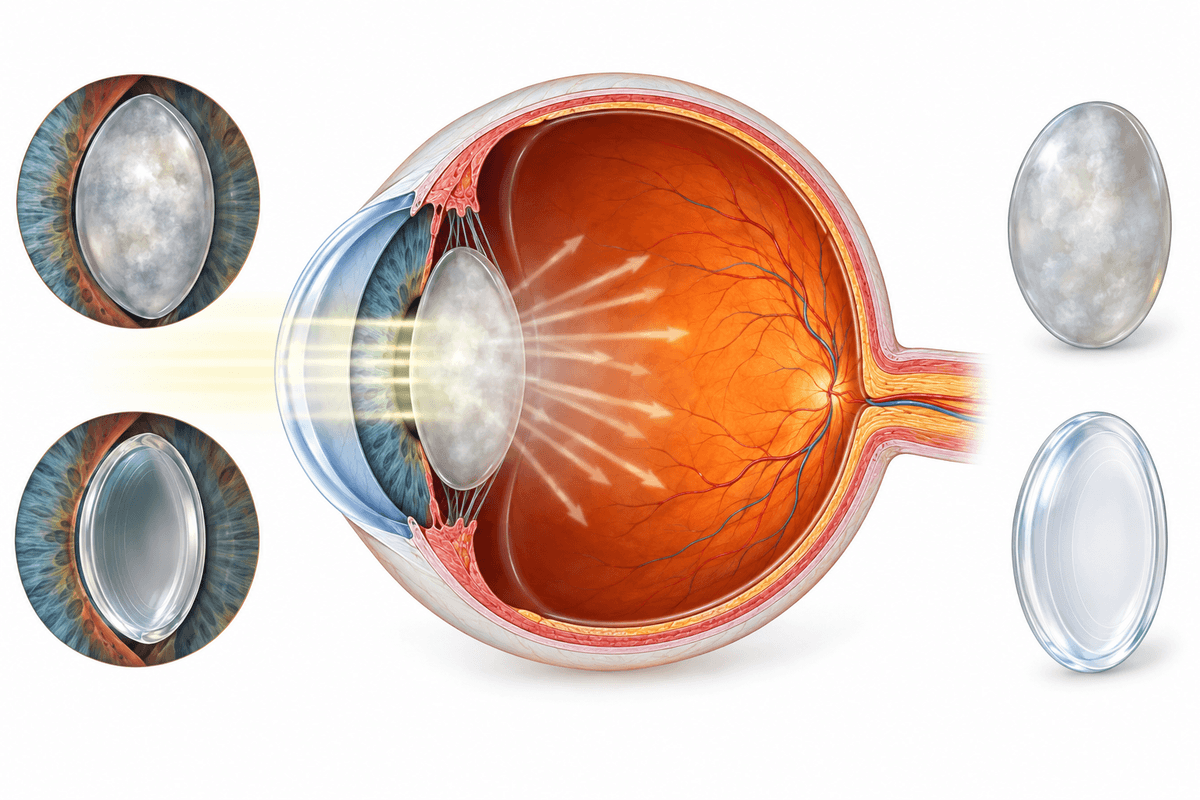
Cataract is a common age-related eye condition affecting many residents of Ahmednagar, where the natural lens of the eye becomes cloudy, leading to blurred vision and difficulty performing daily activities. This progressive condition occurs when proteins in the eye's lens break down and clump together, causing the lens to lose its transparency. Our specialist team at Shreedeep Hospital provides comprehensive evaluation and advanced surgical treatment to restore clear vision for cataract patients.
The most common type developing gradually after age 40 due to natural aging processes affecting lens proteins and causing progressive clouding of vision over several years.
Present at birth or developing during childhood due to genetic factors, maternal infections during pregnancy, or metabolic disorders requiring early detection and treatment.
Develops following eye injury from blunt force, penetrating wounds, chemical burns, or radiation exposure, potentially occurring immediately or years after the initial trauma.
Multiple factors can contribute to the development and progression of this condition.
Recognising the signs early gives you more treatment options.
From conservative to surgical — we always start with the least invasive option first.
A structured, patient-first approach from first visit to full recovery.
Our specialist team performs detailed slit-lamp examination, visual acuity testing, and advanced diagnostic imaging to assess cataract severity, measure eye dimensions for IOL calculation, and evaluate overall ocular health to develop a personalized treatment plan.
Our team at Shreedeep Hospital provides thorough patient education about the surgical procedure, discusses IOL options based on lifestyle needs, performs biometry for precise lens power calculation, and conducts medical clearance to ensure patient safety during surgery.
Our specialist team performs stitchless phacoemulsification cataract surgery in our modern operating theater using advanced microscopes and ultrasonic equipment, with careful attention to minimizing surgical trauma while ensuring complete cataract removal and precise IOL positioning.
Shreedeep Hospital provides comprehensive post-surgical monitoring with scheduled follow-up visits on day one, week one, and month one after surgery, prescribes appropriate medications to prevent infection and reduce inflammation, and ensures optimal visual rehabilitation through careful assessment and management.
What to expect at each phase of recovery.
Patients experience rapid vision improvement within 24-48 hours after surgery, use prescribed antibiotic and anti-inflammatory eye drops four times daily, wear protective eye shield while sleeping, avoid rubbing the eye, and refrain from strenuous activities while the incision heals.
Vision continues to stabilize and sharpen as the eye adapts to the new intraocular lens, eye drop frequency is gradually reduced based on healing progress, most normal activities including light exercise can be resumed, and patients attend follow-up appointments to monitor healing and address any concerns.
Final visual acuity is achieved as the eye fully heals and adjusts to the implanted lens, any residual refractive error is assessed for possible eyeglass prescription if needed, patients can resume all normal activities including swimming and contact sports, and long-term outcomes are evaluated with annual eye examinations recommended.
Most patients experience improvement in vision clarity after cataract surgery, with many able to perform daily activities and experience improved quality of life.
Patients report dramatic improvement in color vision after cataract removal, with colors appearing brighter, more vivid, and true-to-life compared to the yellowed or faded vision experienced with cataracts, significantly enhancing visual enjoyment and daily experiences.
Removal of the cloudy lens eliminates glare sensitivity and halos around lights that interfered with night driving and activities in bright conditions, allowing patients to safely drive at night and function comfortably in various lighting environments.
Many patients, especially those choosing premium intraocular lenses, experience significant reduction in eyeglass dependence for distance vision and potentially near vision, with some achieving complete spectacle independence for most daily activities and enjoying newfound visual freedom.
Untreated cataracts progressively worsen over time, leading to severe vision impairment that significantly impacts quality of life, increases fall risk, and limits independence in daily activities. Advanced cataracts become harder and denser, making surgical removal more challenging and increasing the risk of complications during eventual surgery. Complete vision loss in the affected eye can occur in extreme cases, and the prolonged visual disability increases the risk of depression, social isolation, and reduced cognitive function in elderly patients.
You should schedule an eye examination with our specialist team at Shreedeep Hospital if you experience blurred or cloudy vision, increasing difficulty with night driving due to glare, frequent changes in eyeglass prescription, or colors appearing faded. Immediate consultation is necessary if you notice sudden vision changes, as these could indicate complications. Adults over 60 should have regular comprehensive eye exams every 1-2 years even without symptoms, as early cataract detection allows for better surgical planning and good outcomes.
Early treatment means more options and better outcomes. Book a consultation to understand your condition and explore the right path forward.