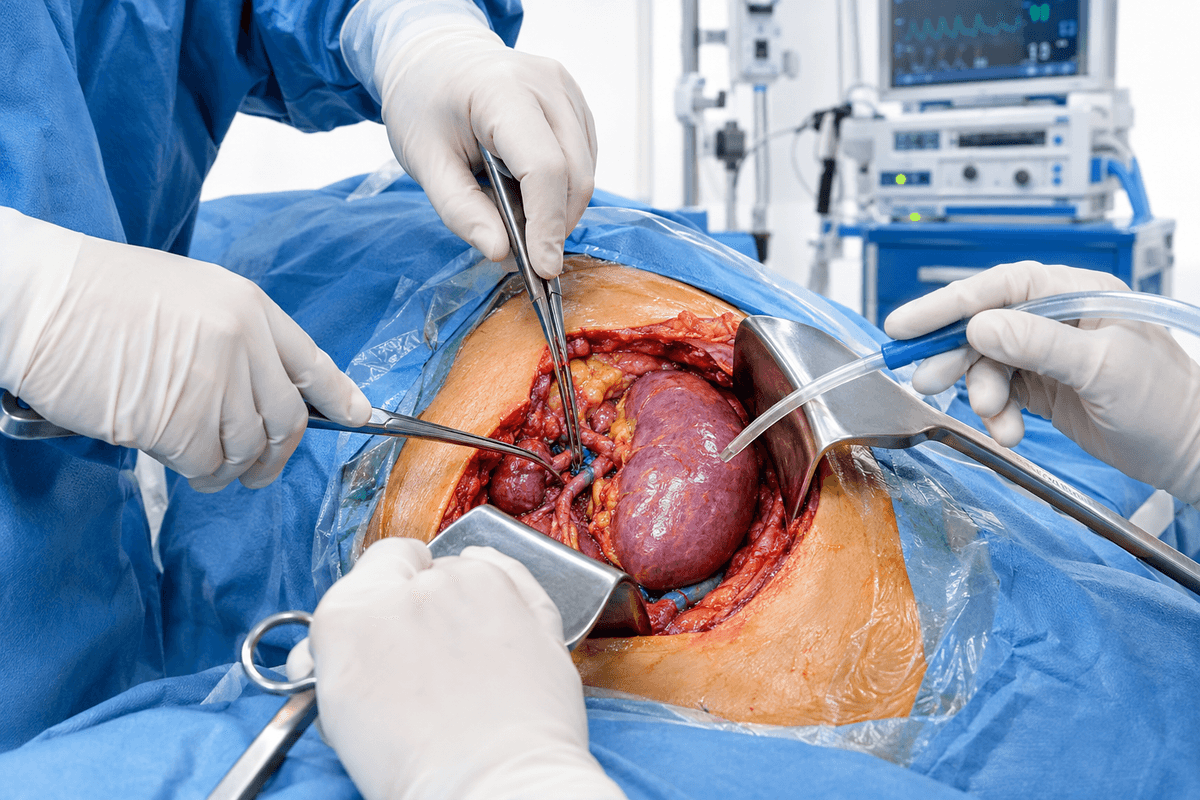
Performed by our specialist team at Shreedeep Hospital
Kidney surgery in Ahmednagar encompasses various surgical procedures to treat kidney disorders, including tumors, stones, obstruction, and congenital abnormalities. These surgeries range from minimally invasive laparoscopic techniques to open surgical approaches, depending on the condition's severity and complexity. Shreedeep Hospital offers specialized kidney surgery under the expert care of our specialist team, a skilled urologist.
We believe in honest, upfront disclosure so you can make an informed decision.
A step-by-step look at what happens during this procedure.
Comprehensive evaluation including imaging studies, blood tests, kidney function tests, and assessment of overall health to determine the most appropriate surgical approach for the specific kidney condition.
General anaesthesia is administered by an experienced anaesthesiologist to ensure the patient remains completely unconscious and pain-free throughout the surgical procedure.
The surgeon creates an incision (either open, laparoscopic, or robotic-assisted) to access the kidney, choosing the approach based on the condition being treated and patient-specific factors.
Depending on the condition, the surgeon performs partial nephrectomy (removing diseased portion), complete nephrectomy (removing entire kidney), stone removal, or repair of structural abnormalities while preserving healthy kidney tissue when possible.
After completing the procedure, the surgical site is carefully closed with sutures or staples, drainage tubes may be placed, and the patient is transferred to recovery for close monitoring as anaesthesia wears off.
A structured, patient-first approach from first consultation to full recovery.
Our specialist team conducts thorough evaluation of your kidney condition using advanced diagnostic imaging and personalized assessment to determine the optimal surgical strategy tailored to your specific needs.
Shreedeep Hospital provides modern operation theaters equipped with advanced surgical instruments, laparoscopic technology, and monitoring systems to ensure precision and safety throughout your kidney surgery.
Our experienced team including urologists, anaesthesiologists, nurses, and support staff work collaboratively to provide comprehensive perioperative care, ensuring good outcomes and patient comfort at every stage.
Shreedeep Hospital offers dedicated postoperative monitoring, pain management, rehabilitation guidance, and follow-up consultations to support complete recovery and monitor kidney function after surgery.
What to expect at each stage of your recovery journey.
First 24-48 hours involve close monitoring in the hospital, pain management through medications, gradual introduction of liquids, and early mobilization to prevent complications. Drainage tubes monitor fluid output and vital signs are regularly checked.
Days 3-7 focus on increasing physical activity, transitioning to solid foods, managing pain with oral medications, and monitoring kidney function through blood tests. Patients learn wound care and receive guidance on activity restrictions before discharge.
Weeks 1-6 involve gradual return to normal activities with continued restrictions on heavy lifting and strenuous exercise. Regular follow-up appointments monitor healing, kidney function, and address any concerns, with most patients returning to work within 4-6 weeks depending on their occupation.
Successful removal of tumors, stones, or diseased tissue provides definitive treatment for the underlying kidney condition, preventing progression and improving overall kidney health and function.
Elimination of chronic pain, recurrent infections, or obstruction significantly enhances daily comfort and allows patients to return to normal activities without the limitations imposed by their kidney condition.
When possible, kidney-sparing surgical techniques preserve healthy kidney tissue, maintaining adequate renal function and reducing the risk of requiring dialysis or transplantation in the future.
For kidney cancer patients, surgical removal offers the best chance for cure and long-term survival, especially when detected early, with excellent prognosis for localized disease treated with complete resection.
Let's clear up some of the most common myths about kidney surgery.
Get a personalised assessment from an experienced specialist. Understand your options, ask your questions, and decide with confidence.