Treated by our specialist team at Shreedeep Hospital
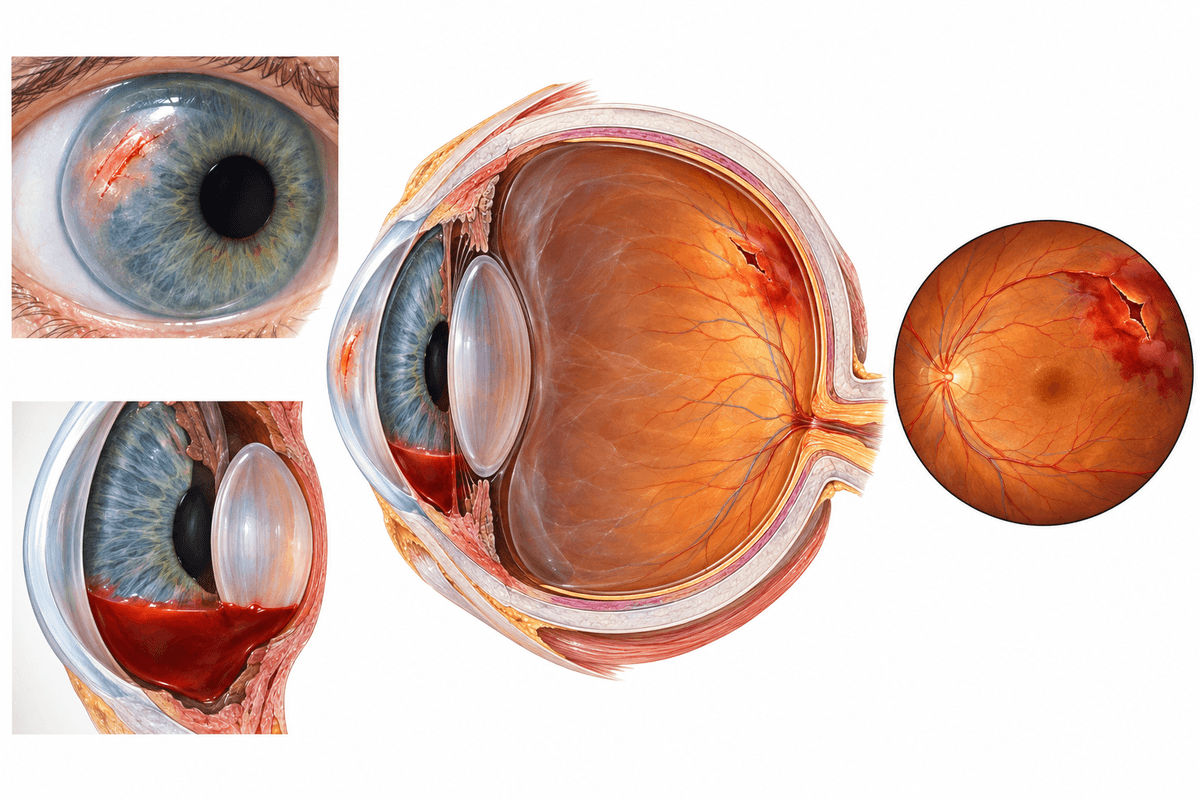
Eye injuries in Ahmednagar can range from minor scratches to severe trauma that threatens vision, requiring immediate medical attention to prevent complications. These injuries may result from workplace accidents, sports activities, chemical exposure, or foreign objects entering the eye. Our specialist team at Shreedeep Hospital provides comprehensive emergency eye care and treatment for all types of ocular trauma.
A scratch or scrape on the cornea's surface, often caused by foreign objects, fingernails, or contact lenses. This is one of the most common eye injuries and typically causes immediate pain, tearing, and light sensitivity.
A serious injury where a sharp object pierces the eye wall, potentially damaging internal structures. This requires immediate surgical intervention to prevent permanent vision loss and may involve the cornea, lens, retina, or other critical structures.
Injuries caused by acid or alkaline substances contacting the eye surface, potentially causing severe damage within minutes. Alkaline burns are particularly dangerous as they can continue damaging tissue even after initial contact, requiring urgent irrigation and specialized treatment.
Multiple factors can contribute to the development and progression of this condition.
Recognising the signs early gives you more treatment options.
From conservative to surgical — we always start with the least invasive option first.
A structured, patient-first approach from first visit to full recovery.
Our specialist team and our emergency team provide immediate triage and assessment of eye injuries 24/7 at Shreedeep Hospital. We perform rapid visual acuity testing, eye pressure measurement, and comprehensive examination to determine injury severity and required treatment urgency.
Our ophthalmology department uses modern diagnostic equipment including slit lamp biomicroscopy, indirect ophthalmoscopy, and ultrasound imaging to assess the full extent of injury. We evaluate all eye structures from the cornea to the retina to plan appropriate treatment.
Based on injury type and severity, our specialist team develops a customized treatment protocol ranging from conservative medical management to emergency surgical intervention. We explain all treatment options clearly and initiate immediate care to prevent complications and optimize recovery.
Shreedeep Hospital provides meticulous post-treatment monitoring with scheduled follow-up visits to track healing progress. We adjust medications as needed, monitor for complications like infection or inflammation, and provide rehabilitation guidance to ensure a good visual outcome.
What to expect at each phase of recovery.
The first week focuses on preventing infection, controlling inflammation, and allowing initial wound healing. Patients use prescribed eye drops frequently, avoid rubbing or pressure on the eye, and attend regular follow-up appointments. Activity restrictions protect the healing eye from further trauma.
During this period, the eye structures continue healing and vision gradually stabilizes. Medication frequency is typically reduced as inflammation subsides. Patients may gradually resume normal activities as directed by our specialist team, with continued protection from potential injury through safety glasses.
Once the eye is structurally stable, focus shifts to optimizing visual function. This may include prescription glasses, contact lens fitting, or additional procedures like YAG laser treatment. Long-term monitoring ensures detection of delayed complications such as traumatic glaucoma or retinal detachment.
With prompt treatment of eye injuries at Shreedeep Hospital, most patients achieve significant vision preservation. Minor injuries often heal completely with full visual recovery, while more severe trauma may result in partial vision improvement depending on structures damaged.
Early intervention by our specialist team prevents serious complications including endophthalmitis, traumatic glaucoma, retinal detachment, and sympathetic ophthalmia. Proper treatment significantly reduces the risk of long-term eye damage and vision loss.
Surgical repair of penetrating injuries restores eye structure and maintains normal intraocular pressure. This prevents eye collapse, preserves the optical pathway, and provides the foundation for potential vision recovery and secondary procedures if needed.
Successful treatment of eye injuries allows patients to return to work, sports, and daily activities safely. With appropriate protective eyewear and follow-up care, patients can maintain their visual function and prevent future injuries to both eyes.
Untreated eye injuries can lead to severe complications including permanent vision loss, chronic pain, and eye infection that may spread systemically. Penetrating injuries without treatment often result in endophthalmitis, a devastating infection that can destroy the eye within days. Even minor corneal abrasions can progress to corneal ulcers with scarring if left untreated, while chemical burns continue damaging tissue and may cause blindness.
Seek immediate medical attention at Shreedeep Hospital for any eye injury involving pain, vision changes, bleeding, chemical exposure, or penetrating trauma. Even seemingly minor injuries like small scratches should be evaluated within 24 hours, as symptoms may worsen or indicate deeper damage. Emergency care is critical for chemical burns (irrigate continuously while traveling to hospital), sudden vision loss, visible eye deformity, or any injury from high-speed objects that may have penetrated the eye.
Early treatment means more options and better outcomes. Book a consultation to understand your condition and explore the right path forward.